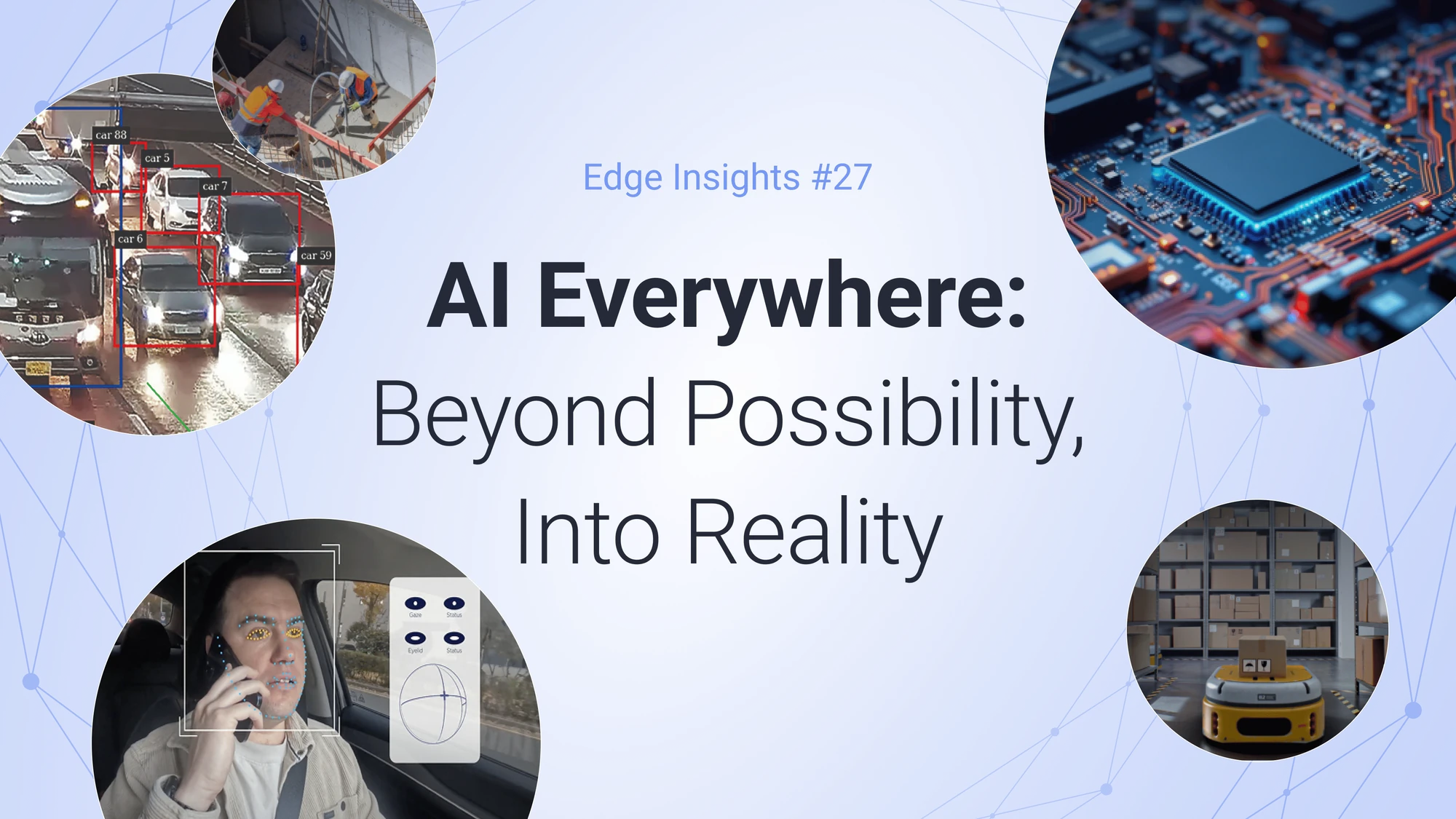
🚦 Transportation — Advancing Traffic Intelligence on a Global Scale
📱 Consumer Devices — Scaling Generative AI on Everyday Devices
🚘 Physical AI — Bringing Embedded Intelligence to Real-World Industries
🩺 Healthcare — Delivering AI Where Care Truly Happens
As AI moves from experimentation to real-world deployment, the focus is evolving—not just on how powerful AI can be, but where it can run and how efficiently it can operate at scale. This growing emphasis on deployability and responsiveness is accelerating the rise of edge AI, where intelligence moves closer to the devices, machines, and environments that power everyday life.
According to global market research firm MarketsandMarkets, the edge AI market is expected to grow from USD 40 billion in 2025 to USD 173.9 billion by 2030, reflecting a remarkable annual growth rate of 37.7%—a clear indication that AI’s greatest impact will come from where it is most readily deployable.
In this edition, we explore how that shift is becoming reality through Nota AI’s work in November—bridging hardware and software, and bringing intelligence closer to where life and business actually happen.
Urban mobility is becoming increasingly complex—driven by rising vehicle density, diversified modes of transport, and the rapid advancement of urban infrastructure. As road environments become more dynamic and unpredictable, the focus is shifting from basic monitoring to intelligent systems that can interpret context, detect risks early, and enable preventative safety.
To help meet this need, Nota AI collaborates with municipalities and public agencies through its ITS (Intelligent Transport Systems) solutions to enhance safety and optimize traffic flow. These solutions span traffic monitoring, pedestrian safety, automated incident detection, and smart parking. Leveraging VLM (Vision Language Model)–based ITS solution, Nota AI enables systems that go beyond object recognition—proactively detecting risks in complex road environments and delivering text-based insights that help prevent accidents before they occur.
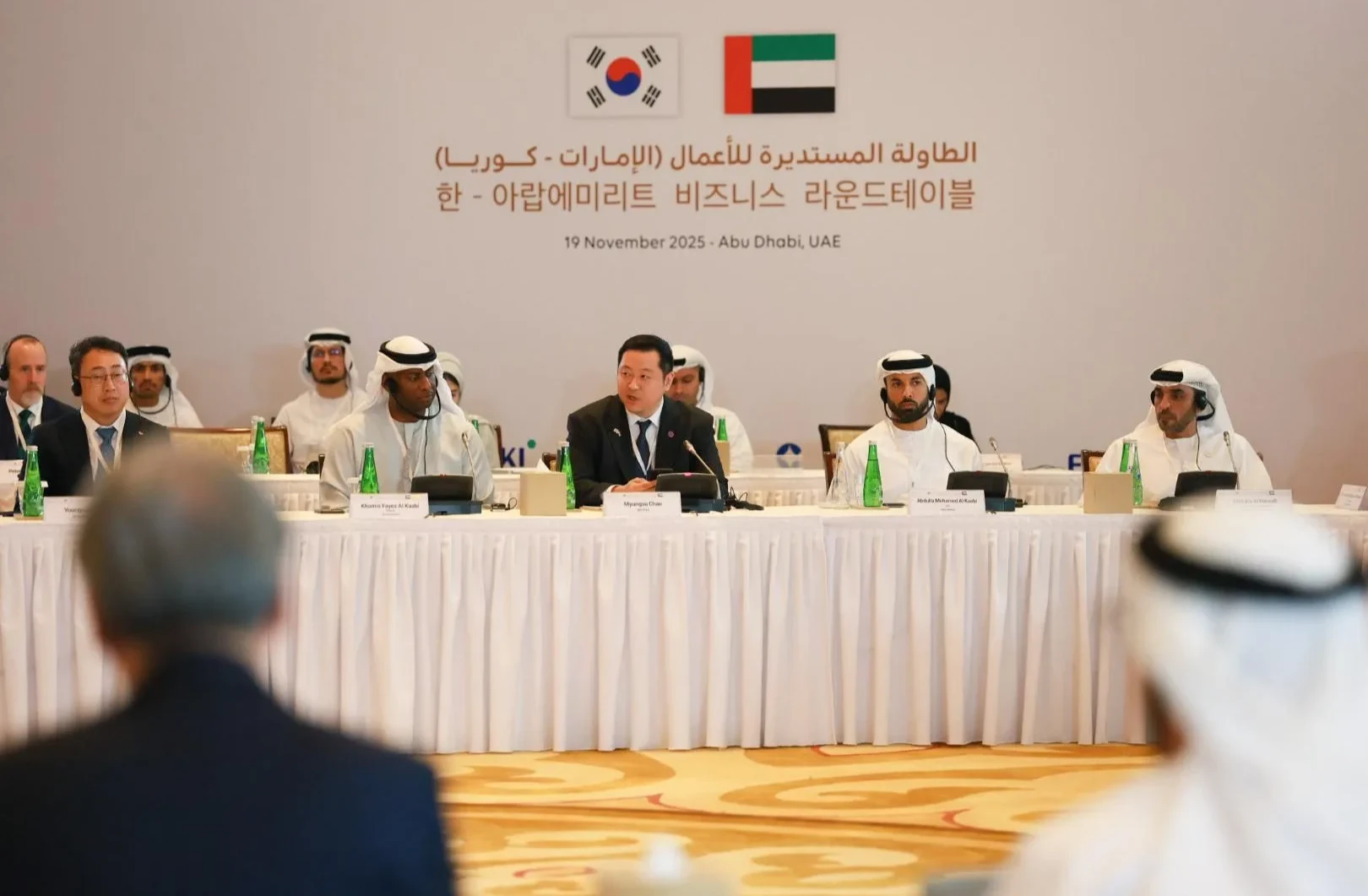
This approach is now gaining global traction. In November, Nota AI was the only Korean AI startup invited to participate in the Korea–UAE Business Roundtable during the presidential state visit, joining the official delegation to discuss the expansion of generative AI–based ITS solutions. Building on last year’s partnership with UAE transportation infrastructure company ATS and this year’s supply agreement with Dubai’s Roads and Transport Authority (RTA), Nota AI has demonstrated tangible progress in the region.
During the visit, Nota AI advanced discussions with Dubai RTA on scaling ITS deployment in 2026 and initiated collaboration with the Abu Dhabi Department of Transport to jointly explore next-generation traffic intelligence—laying the groundwork for broader expansion across the Middle East.
👉 Learn more about our ITS solution: https://www.nota.ai/ai-solutions-its
Across industries, there is a growing expectation for AI to be available instantly—regardless of network connectivity or infrastructure conditions. This shift is driving demand for AI that runs directly on devices: lightweight, efficient, and capable of real-time interaction—rather than relying solely on network-based processing. However, most generative AI models remain too large and compute-intensive for mobile hardware, which is why manufacturers are increasingly treating optimization technology as a core competitive differentiator.
This shift became especially evident in November, when Nota AI’s model compression and optimization technology was integrated into Samsung’s latest AP chipset, Exynos 2500. Through this collaboration, Nota AI now powers Exynos AI Studio, enabling real-time generative AI experiences to run natively on smartphones—without dependence on cloud infrastructure. By improving both optimization efficiency and performance, Nota AI is helping make on-device generative AI not just possible, but practical at scale.
👉 Read the full press release on the Nota AI x Samsung Electronics collaboration: https://www.nota.ai/news/enpressrelease2511
The rise of Physical AI—systems that can interpret context, make decisions, and act in real time directly on devices—is reshaping how intelligence is being embedded into cars, robots, drones, and industrial systems. As AI moves closer to where actions take place, the industry is increasingly demanding models that can operate efficiently on-device—without relying on cloud infrastructure or tolerating high latency.
In November, Nota AI took a meaningful step in advancing this vision by joining the national M.AX (Manufacturing and Autonomous Transformation) Alliance as the designated provider of on-device AI optimization. Working alongside major automotive and electronics manufacturers, Nota AI will help build the AI foundation for Software-Defined Vehicles (SDVs), contributing its expertise in model efficiency, deployment, and real-time embedded intelligence.
Further reinforcing this direction, Nota AI deepened its work in automotive AI through a collaboration with Telechips, a leading semiconductor company. By applying its model optimization technology to the Dolphin5 AP chipset, Nota AI enabled lightweight, real-time facial recognition tailored to the chipset’s NPU architecture—supporting applications such as cabin monitoring, driver authentication, and safety analytics, even under constrained compute environments.
👉 Learn more about Nota AI’s AI model optimization technology: https://netspresso.ai/
AI is rapidly emerging as a transformative force in healthcare. According to MarketsandMarkets, the global AI healthcare market—valued at USD 1.43 billion in 2017—has expanded to USD 15.83 billion in 2023 and is projected to surge to USD 181.9 billion by 2030. This growth is fueled by the exponential rise and complexity of medical data, increasing demands from patients for higher quality and faster diagnosis, persistent shortages of medical professionals, and escalating healthcare costs.
Against this backdrop, hospitals and healthcare providers are looking for AI solutions that are not only accurate, but also practical, accessible, and deployable directly where care is delivered—whether in clinics, emergency rooms, or even at home. That means AI must increasingly operate on edge devices—lightweight, secure, and capable of real-time inference—rather than relying solely on cloud-based processing.
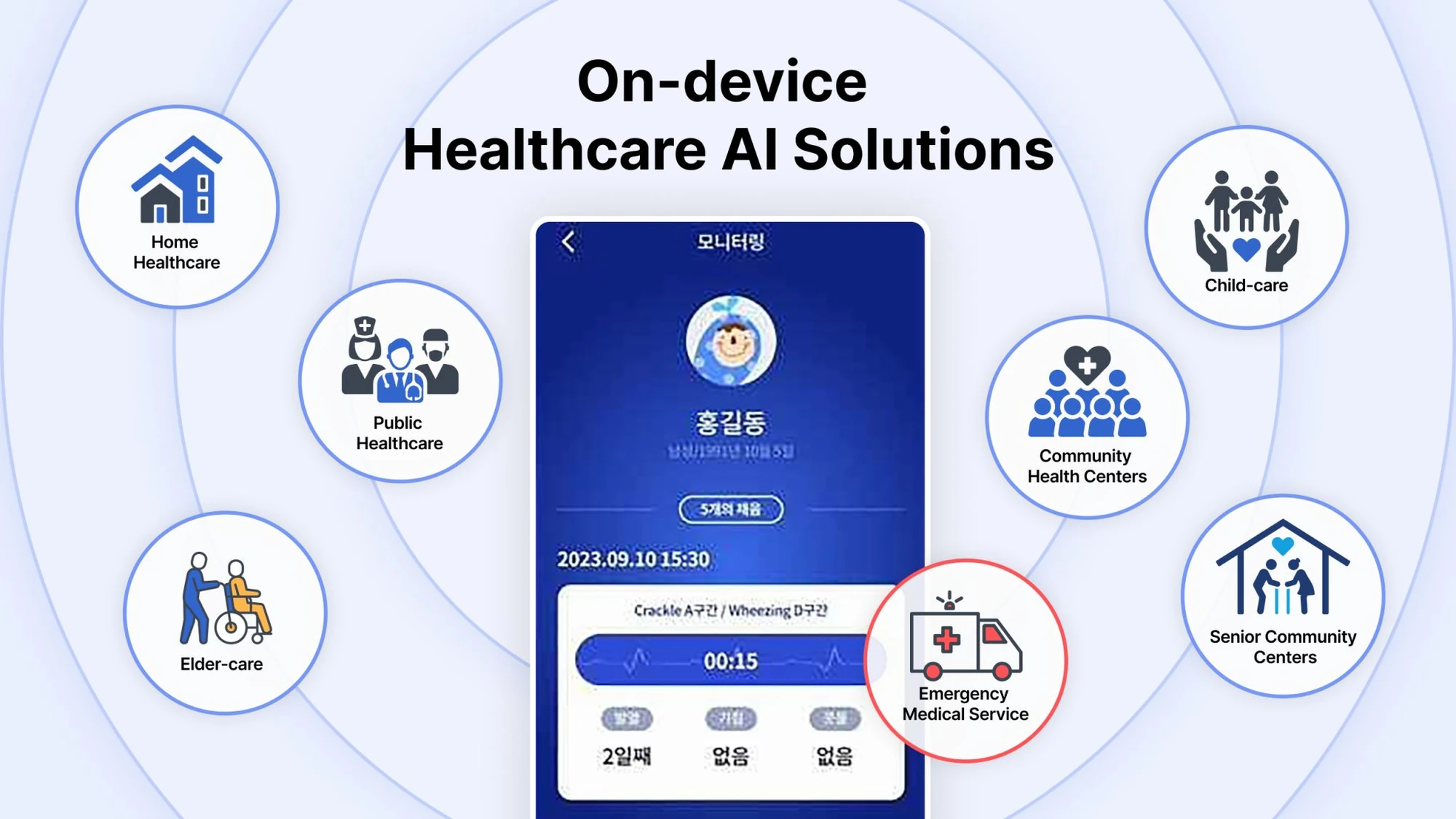
To help make that shift possible, Nota AI applies its model compression and optimization technologies to enable clinically meaningful AI to run directly on everyday devices such as smartphones. In November, this vision was validated through a major milestone: in collaboration with Korea’s largest pediatric hospital, Nota AI successfully tested an on-device AI diagnostic technology that analyzes children’s respiratory sounds directly through a smartphone—achieving over 86% accuracy in clinical testing and demonstrating real-world clinical applicability.